Tip lead
The inside ski tends to get forward through the turn and end a little forward of the other one - also referred to as lead change as the new inside ski takes the lead in every turn.
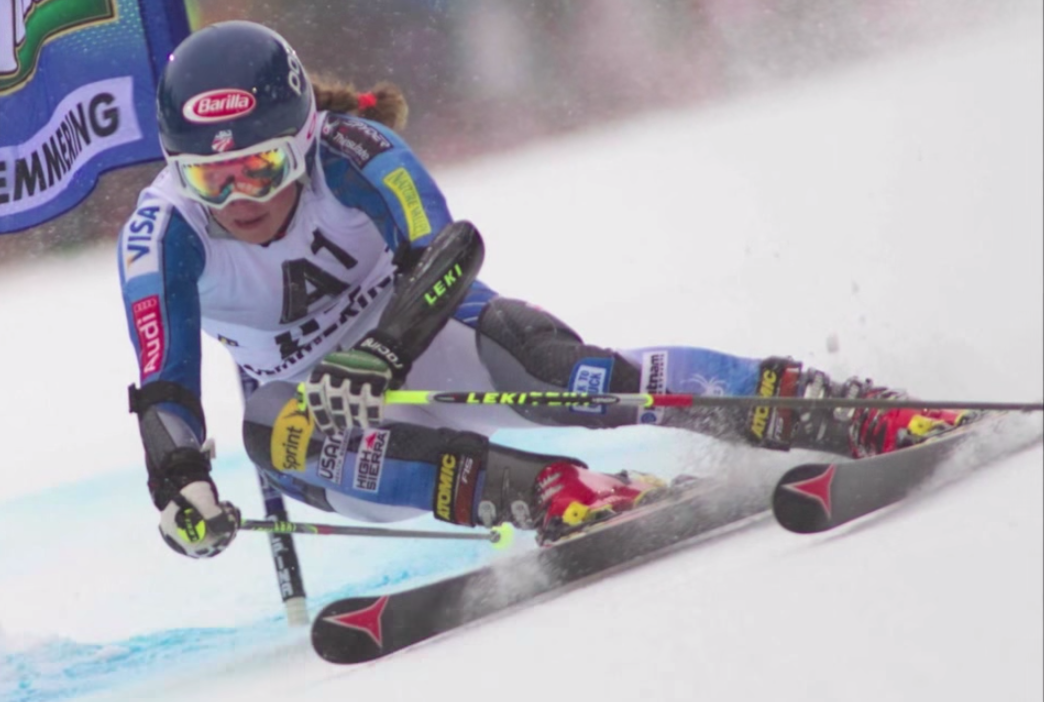
This is the basic mechanism: vertical separation causes the inside boot to move forward, because the boot cuffs reduce the range of motion of the ankles. The more separation, the more it tends to move forward.
Here is the result when lifting the ski boot to about knee height and keeping both the soles parallel (with the floor) and the shin angles the same:
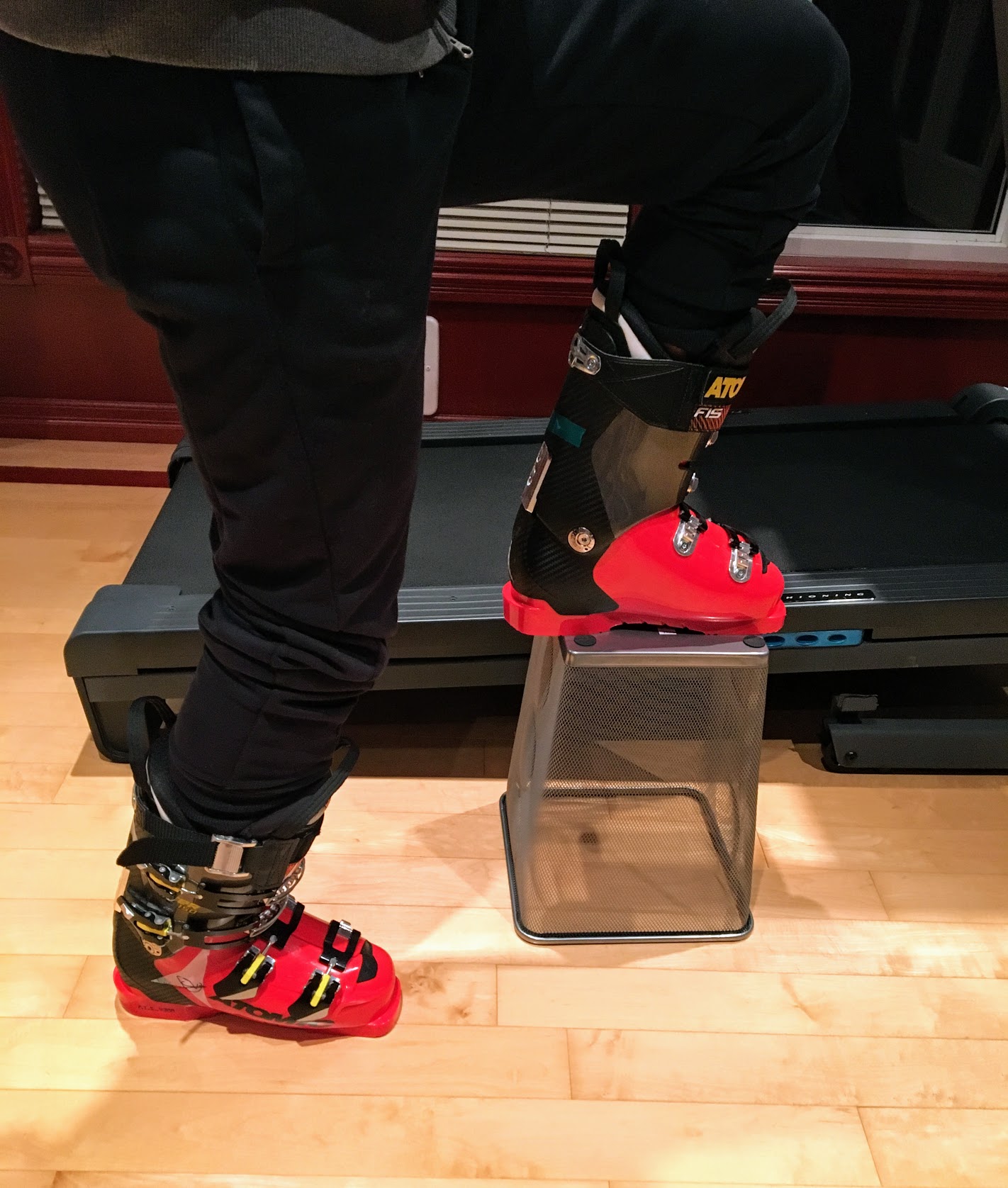
This is what we call "lazy shuffle".
However, while the boot cuffs do force a certain amount of range limits on the ankles, it would be a mistake to conclude that we must lazily keep the ankles at the same angles, all the time. This would result in what we call "lazy tip lead" or "passive", which is not conducive to high performance skiing.
Shuffling the feet
Shuffling the inside ski forward was often taught for a while as a way to easily initiate the turns - it makes it easy to change edges and drag the body inside the turn... but it generally has a nasty effect of inducing hip dump and interferes with carving and edging.
On the contrary, tip lead is best controlled and kept in check. Some tip lead develops naturally throughout the turn and in racing, Slalom specifically, it may be a tactical choice, but in general, shuffling the skis on purpose is not common in performance skiing.
Managing tip lead generally requires attention and work on developing inside ski management skills.
Control it
Our aim is to keep tip lead under control and don't let the inside foot shoot out too much ahead. How much? It depends on the slope steepness and our inclination.
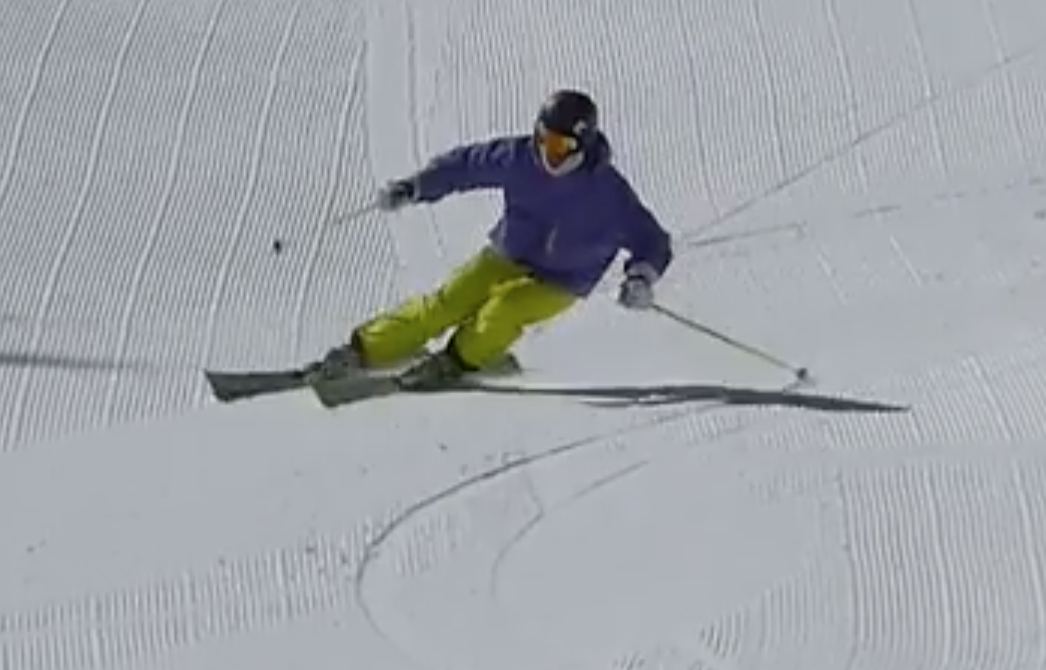
The often used cue in ski racing is to keep the tips even, but that can be done by either pushing the outside ski forward or pulling the inside ski back.
Try this test:
(from Keep your feet together)
Countering
The shorter the turns, the more counter should be used. In faster events with large radius turns, less countering can used - some tie this to the amount of tip lead, see The wall. However, both counteracting and coiling are defined as active movements, not just a passive result of tip lead.
Here's another point of view, from Josh Foster:
and
Biomechanics
Get effective to see this · $40/yr
Sessions:
- Keep your feet together
- Pull back the inside boot to stay forward
- Tipping - flex and pull back
Some drills to address this: