The Phantom
The Phantom drill is a very effective drill for tipping and aligning the stance fore-aft, balancing on the outside ski, and a lot of other good side effects. It really is at the root of any great ski turn, as it teaches clean turns, with a definite release, transfer and engagement. This is one of the drills you simply can't do too much of!
Make sure you incorporate this drill into your ski warmup routine this winter season... it is part of mine!
The phantom drill
It is about a specific turn sequence, executed at fairly low speeds, on a green/blue slope. Medium-wide turns to allow sufficient time for perfect execution.
Here is the turning sequence, while going on a traverse across the slope. All the focus during this drill is on the inside ski, the ankle, and boot:
- lift the tail of the soon to be inside ski, keeping the tip on snow, without pressure
- pull back this inside foot, to keep boots even (i.e. don't shuffle it forward)
- bring the inside boot close to the soon to be outside boot
- tip the lifted inside ski into the new turn, to start the turn, from the ankle
- keep tipping the ski, to increase the angles of the turn
- keep it back throughout the turn and constantly tipping
- as the turn ends, place both skis on snow for the transition and repeat on the other side
The proper execution of this drill is critical. Every element above must be present, as they all work together. The balance should be established on the new outside ski very early in the new turn, to be able to lift the new inside foot and do the drill correctly.
Progress to lift the old outside ski off the snow earlier and earlier, until you transfer weight to the new outside ski while it is still on the old edges and then tip it through flat and onto the new edges.
Here's a phantom drill intro:
You don't really have to lift much, just off the snow, maybe a couple of inches at the boot (lift the tail more than the tip). Focus on tipping the inside ski from the foot/ankle (using inversion) - since the inside ski and boot is lifted free off the snow, it will be very easy to tip.
The turn will be executed exclusively on the outside ski, developing balance and proper movements.
This is a great video on it and demonstration at lower speeds:
This ski drill is called phantom because the tipping of the inside ski causes the other ski to follow tipping and the skis to turn that way. That is the "phantom move".
Here's a higher speed execution:
Here are the steps to focus on, for a good execution:
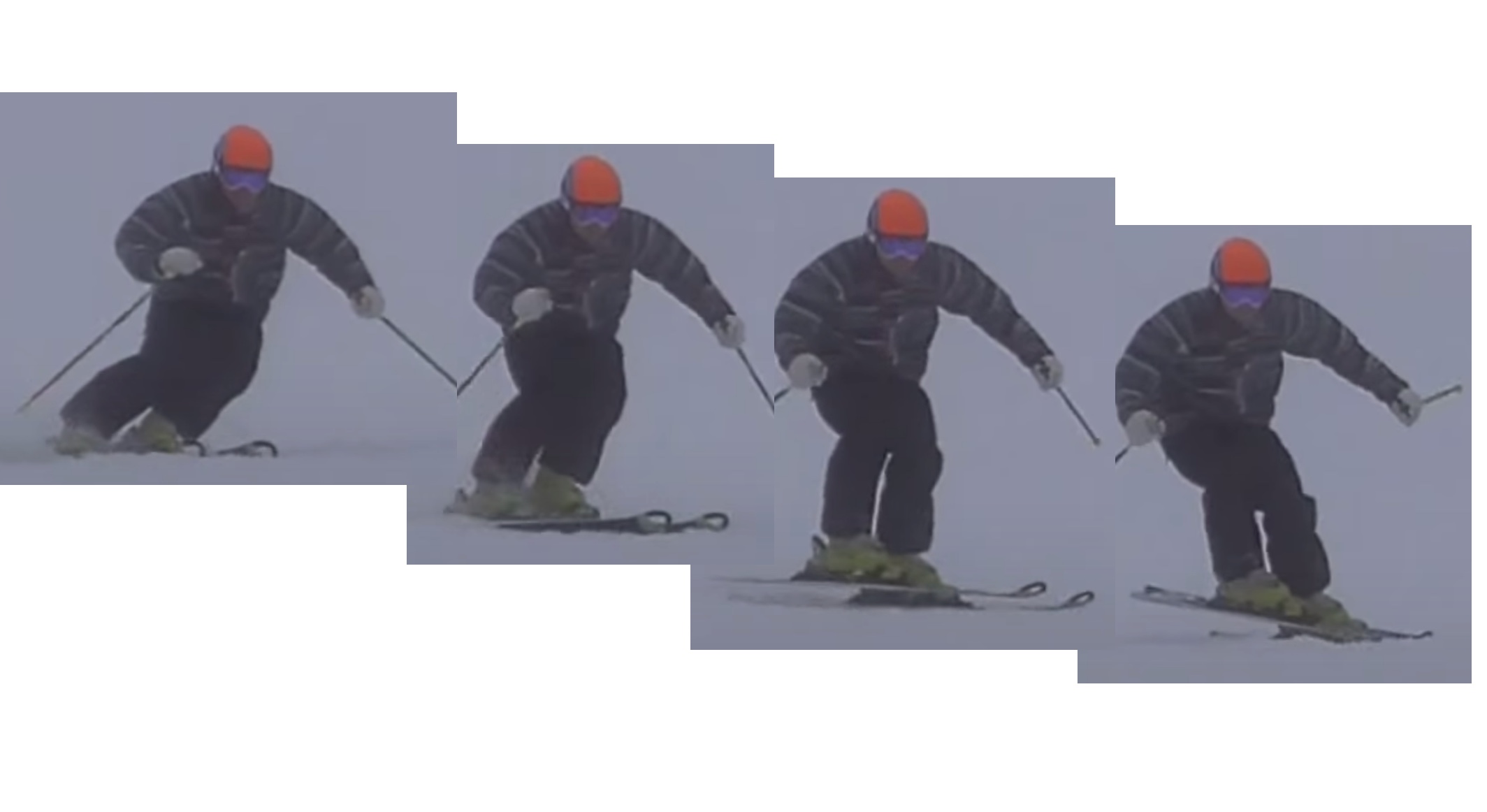
From left to right:
- Finishing the old turn, releasing with flexing the old outside leg
- Transfer balance to the new outside leg
- Lift the old outside leg
- Tip down and foot-tipping into the new turn and engagement
Bad habits
This drill is guaranteed to bring your ski racing and general skiing up in quality. Some of the bad habits addressed: Wide stance, hip dump, shuffling, weight on the inside ski, lack of balance.
Weight outside ski inside tip down tail up
Here a cousin of the phantom drill, with Mikaela Shiffrin explaining it in detail:
Tail lifts are also another name for a related drill common in race coaching. However, the phantom differs from these in one critical aspect as it adds a focus on using the light foot and ankle for tipping.
Super phantom
Some habits are really hard to break, especially the forceful transfer to the new outside ski, causing a lot of skiers to not execute the drill properly, so the "phantom" was eventually revised with am additional emphasis on the early and definite transfer to the new outside ski and named "super phantom", it should always include these elements:
- flexing to release the old outside ski
- transferring the balance to the new outside ski early, while it is still on the old edges
The Super Phantom is the same as the phantom, if you were doing it right.
Just add a focus on transferring the balance to the new outside ski while it's still the old inside ski and lift and tip the old outside ski
Video: https://youtu.be/5cIU-1KQR-Q
Progressions and notes
You can progress from here to executing the drill on a blue/black slope, short turns, more rhythm, stubbies, an impossible flush, etc. GS skis will require even more balance than the Slalom skis, on the outside ski.
Perfect execution is paramount, to acquire the right movement patterns, while speed is not. If you do this drill while carving on a blue run and you lack good balance and speed control, maybe do not carve it or move down to a green run!
Details and advanced versions
Lifting the tail of the inside ski will ensure that the balance is all on the outside ski and the body/hips are forward rather than back. Also, it will free up the knee to move in, as it has to flex.
Keeping the inside heel back will encourage the knee to move inside the turn rather than the hip. Also, complements the lifting of that ski, by moving the hips forward. The accompanying dorsiflexion will also make it easier to invert the foot/ankle.
Bringing the inside ski close to the outside ski makes it easier to balance on the outside ski and also will biomechanically make it easier to tip the inside ski into the turn (by maximizing the range of motion of the knee and maximizing the leverage for inversion inside the boot).
Be careful not to pull back the entire leg from the hips, but rather pull back just the boot, flexing at the knee with the hamstrings, or you will lock up the hips and upper body.
Do not rotate into the turn... if anything, the contrary: rotate the hips the other way.
Advanced versions
One advanced version of the phantom is the one called touch-tilt in PMTS. Basically touch the inside edge of the inside ski, to the inside rivet of the outside boot, as you narrow the stance and tip the inside foot strongly.
This is a very good variation of the drill, once you have the basic movements down.
This drill will be added to your season starter list when you're moving to the next topic and it is a great idea to spend some time on this at the beginning of the season, a few hours ideally. It really develops great ski control and finesse - that's what we should look to develop at the beginning of the season, to allow our skiing to evolve.
Read more
Related thoughts:
- Focusing on the Inside Ski
- Skiing - the wide stance debugged
- Pinkie Leads The Way
- Click your heels
Sessions:
- Start tipping
- Pull back the inside boot to stay forward
- Tipping and keeping the feet underneath
- Keep your feet together
Drills:
References
- Anyone can be an expert skier 1, Harald Harb, p53 [^1]