Coiling
Among the few related terms that refer to the rotational Separation of the lower and upper body, like counter and Counteraction, coiling implies a strong rotational separation of the legs and torso, involving significant muscle activation.
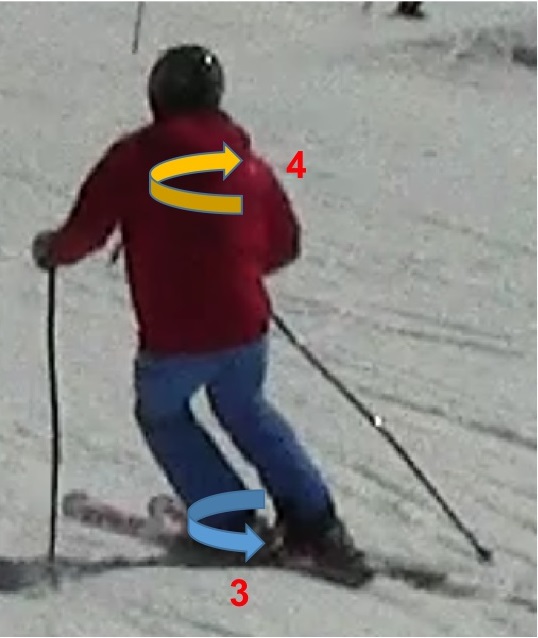
It is a fundamental component of good skiing, complementing Counterbalancing and lateral angulation, to maintain balance and alignment on the outside ski. As the skis turn (3) above, the torso turns the other way (4) and maintains a stable appearance. You will also hear this presented as the legs turning under a stable torso.
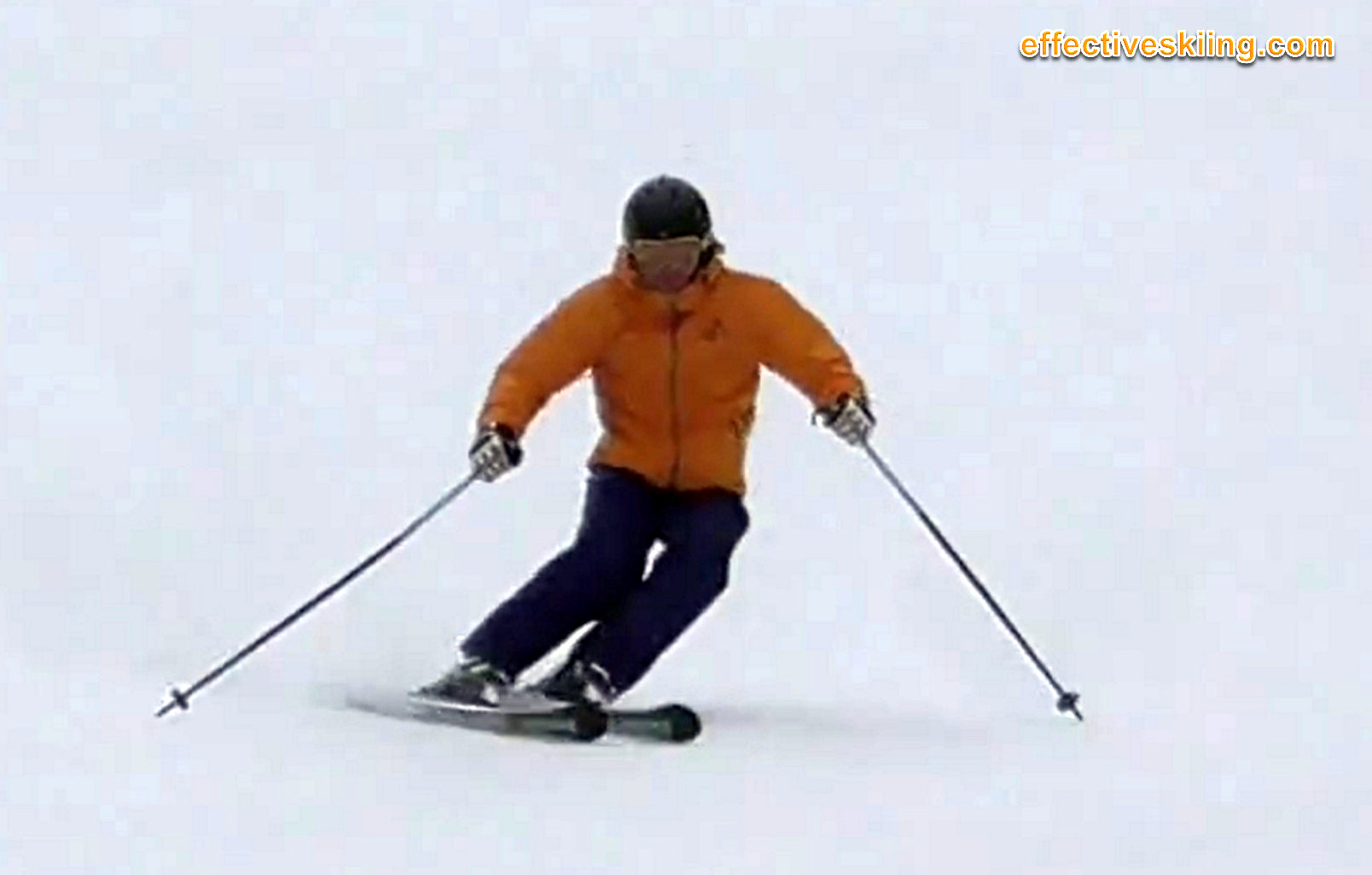
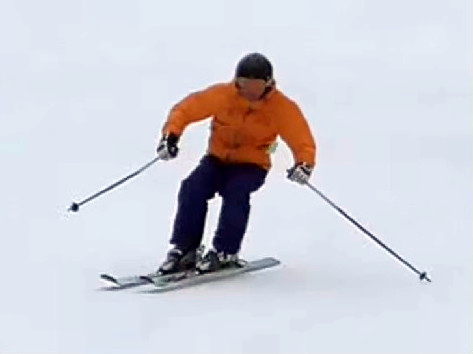
The effort is very useful and more pronounced in short, snappy turns, but maintaining/creating this 'coiling' tension is very important in long turns and all snow conditions as well.
The required tension in the lower body, required to prevent the upper body from following and over-rotate into the turn causes some to confuse coiling with steering. Here's another view, from the back:
Storing energy
The notion of coiling is used a lot in racing[^1] and because of the insistence on carving, it is similar to counteraction, but with a specific implied strong muscle action - the result of strong countering, above what just Tip lead provides (let's call that "static counter").
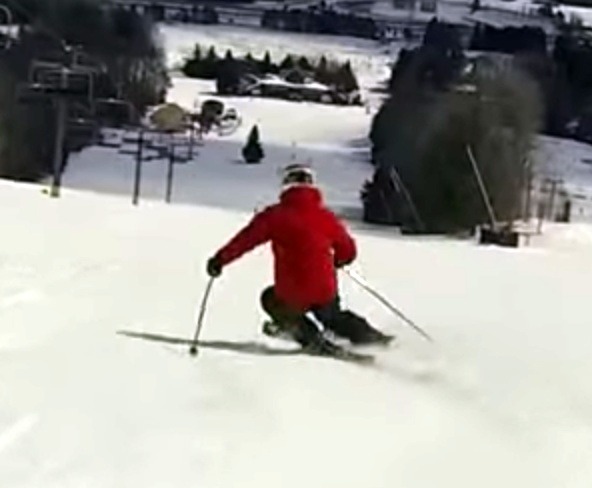
Coiling is very prevalent in expert skiing, part of the high degree of separation between the lower and upper visible in all expert skiers, as the extreme angles and turn shapes require extreme Counterbalancing and coiling. Here's more dramatic coiling in high-performance skiing:
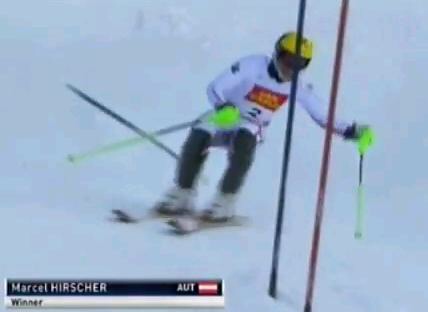
Especially as the turn ends, you are winding or coiling storing lots of energy in the core muscles and throughout the body, as the skis come around sideways but the torso keeps facing down the hill. This energy is used later, see uncoiling below.
Rotation
The opposite of coiling is "Rotation" which is when the torso rotates into the turn, following the skis or even rotating into the turn more than the skis, here are some examples (assuming the photos were taken past the apex):
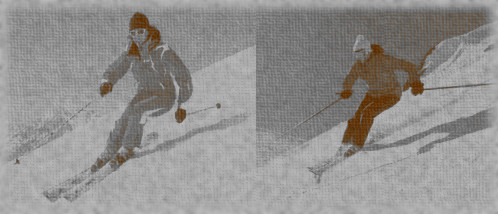
This typically results in an exaggerated hunching forward of the torso, to maintain dynamic balance, reduced balance and reduced grip of the outside ski. A classic cue for rotation is the outside hand ready for the pole plant too soon, while the inside hand is dropped low and back, both visible above - see more details at Rotation.
On closer inspection you'll notice their shoulders are rotated into the turn and facing the inside ski - this would be ok only for a brief moment at the top of the turn, but since they are reaching for the pole plant, they must be at the bottom of the turn now.
Uncoiling
The flip side of coiling is the unwinding or uncoiling that follows after skis flat, which aids in getting the skis to grab an edge.
See Coiling and uncoiling.
Why coiling and separation are good?
So, why is coiling and separation a good thing? Why train it etc?
See Separation and ski performance.
Upper body vs lower body
While counteracting is defined specifically to be an upper-body action, coiling is often viewed as a lower body action, i.e. the legs coiling "under a stable upper body".
In reality, with the skis carving, lower body efforts to "coil" would imply a rotation into the turn and would take the skis off the edge.
Posts:
Sessions:
- Intro to coiling
- Upper and lower body separation again
- Strong inside half
- Explore coiling
- The coiling contortion
- Refine uncoiling
Drills:
→ Start improving your coiling
References:
- CSCF Approach to ski racing [^1]