The wall
The wall is a rule of thumb used[^1] by the USSA to guide how much separation we should create in the average Giant Slalom turn, throughout the turn and the principle says that you should attempt to maintain a "wall" or a plane with the shoulders, knees and boots, so that the hips and shoulders shuffle forward an amount equal with the boots. This geometry however has a very narrow application, as we'll soon see.
The boots themselves shuffle because of the boot's stiff cuffs. Here's a slight "wall" - you can see that the left boot has shuffled forward with the knee, hip and shoulder countering roughly the same amount, so they vertically are on top of each-other:
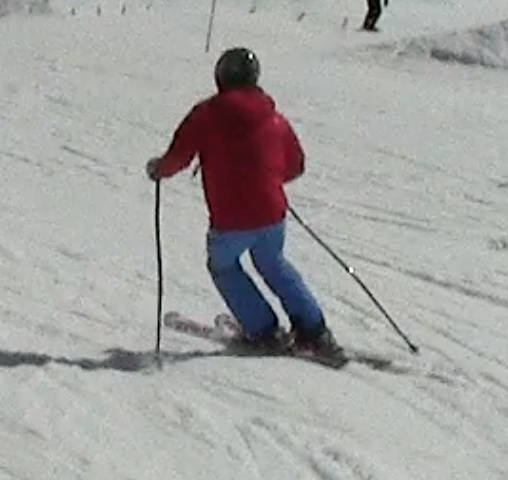
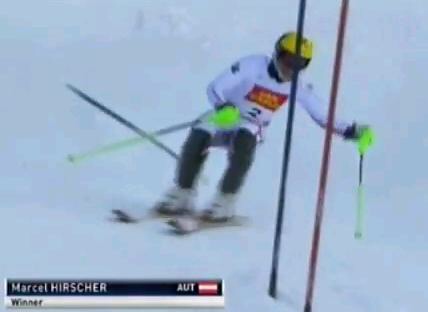
This principle introduces a slightly countered relationship throughout the turn, and it may be a reasonable rule of thumb for how much upper body counter should be present in some Giant Slalom and large turns. Not necessarily applicable for slalom and short turns, where extremes like this one are more common:
Foot shuffle
The main idea behind the wall is that the inside foot will have to shuffle as we tip the skis on edge more and create Vertical separation, see Tip lead. This is because the boots force us to maintain somewhat equal ankle flexion and it's something you can easily replicate at home: in tightly buckled ski boots, lift one of the feet on a small chair or step, so that the upper boot is about at the knee level. You will notice that the boot will have to shuffle forward to maintain the same ankle flexion and the reason is the cuff, which will push on the tibia.
You can see the effect at work here - the step exercise (or use a bucket and call it the bucket demo):
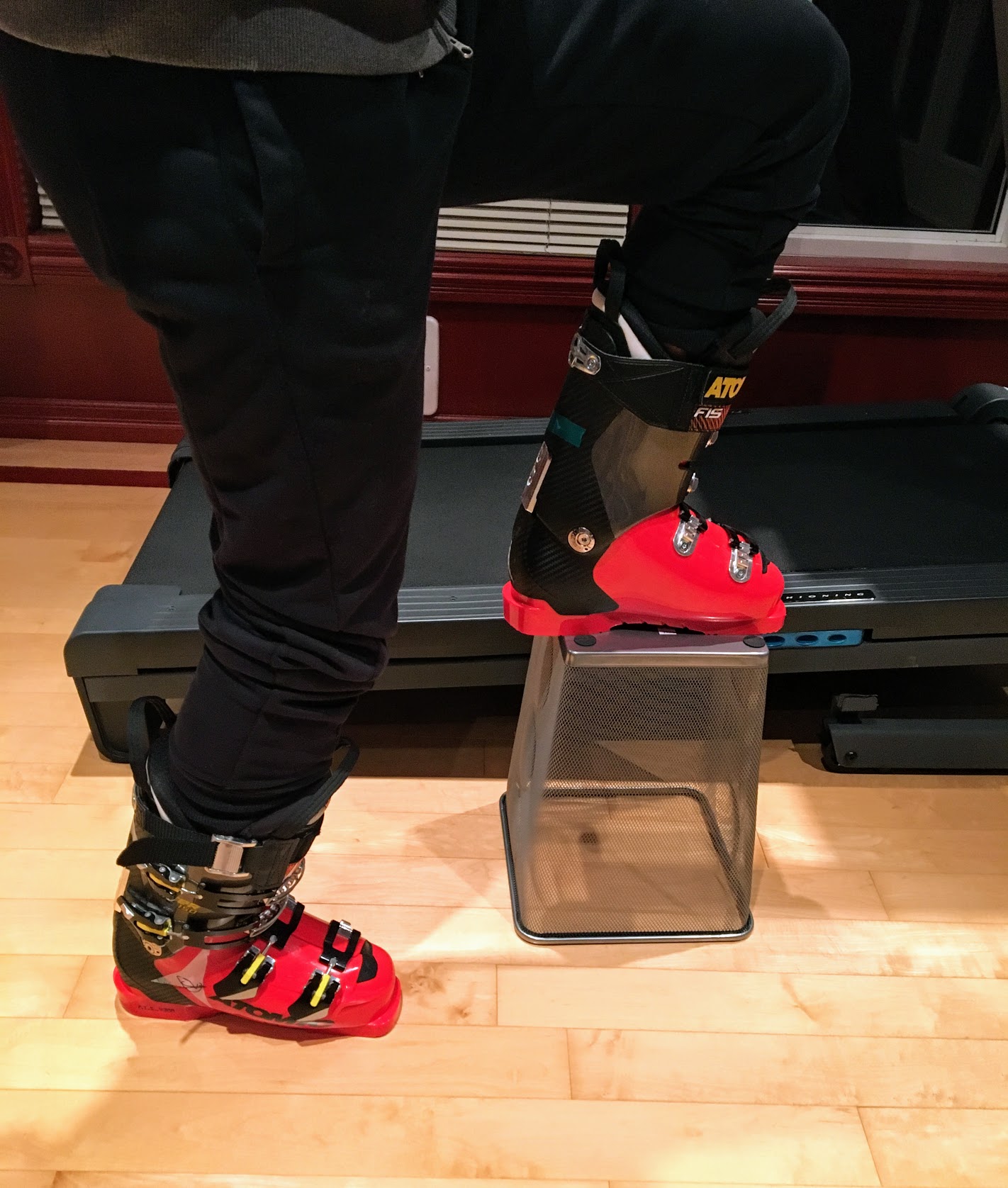
So this shuffle appears when going across a steep hill or when you're at big angles, hip to snow, where there is a lot of Vertical separation between the boots. The wider the stance, the more pronounced this effect. For every day skiing there's no real need to be wide-footed or put the hip on the snow, so the effect is fairly small, easily controllable.
Good skiers, however, will resist the geometrical shuffle, keeping the Tip lead in check and they will counter.
However, maintaining equal ankle flexion is not necessarily a goal or movement and in fact not something racers seek specifically all the time. It is necessary to a certain extent and imposed by the stiff boot cuff, but in regular boots there is sufficient wiggle room to alter the shin angle within a certain narrow range.
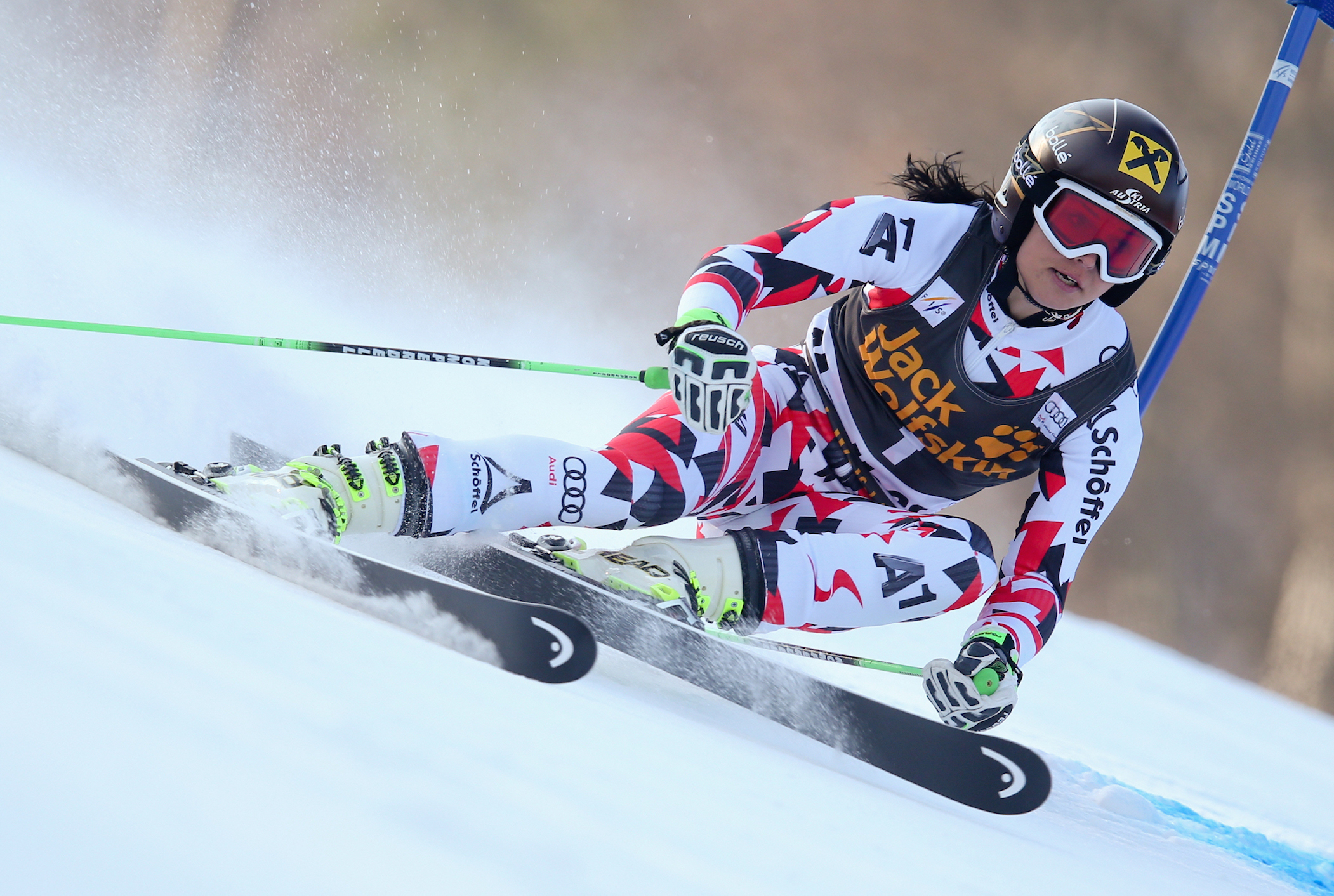
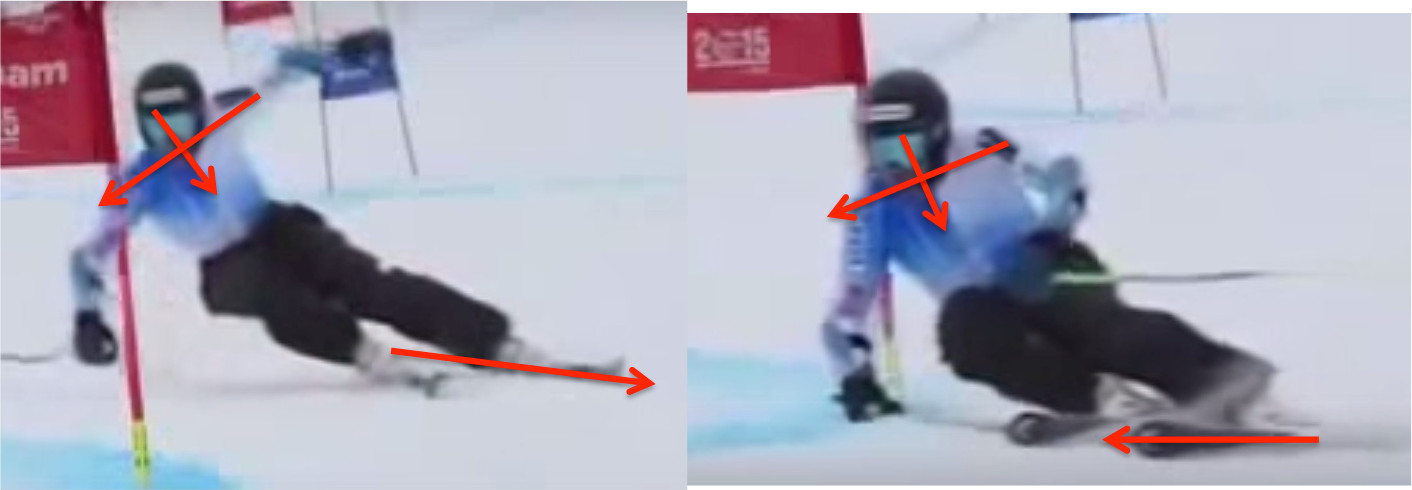
This again is something you can test at home, by moving the higher boot back and forth on the step. Considering the length of the skis and the forces that appear in a race turn, this fore/aft movement is in reality larger. In fact, racers struggle to fight this shuffle and create coiling while Keep your feet together as evident in the following:
versus
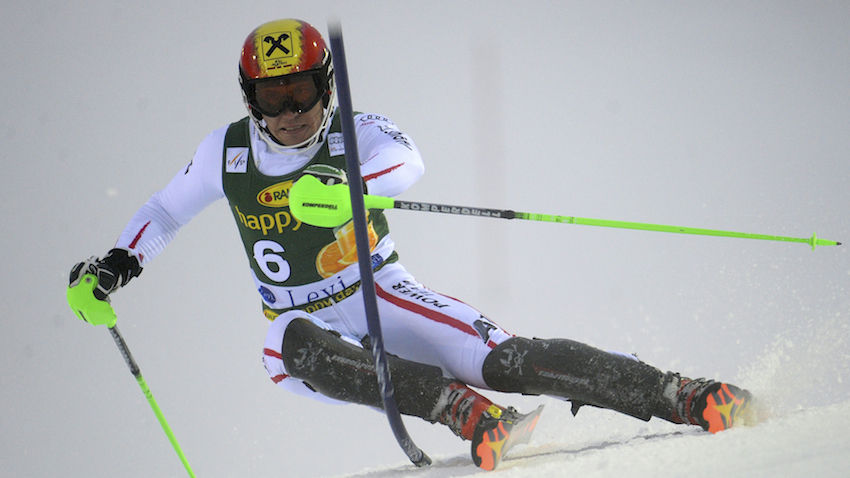
In both you will in fact notice that the inside foot shuffled a roughly equal amount and the racers try hard to pull it back, evidenced by the fact that the inside boot is very close to the outside knee in both cases. Also, the amount of counteracting with the upper body is very different, as required by the specific turn and tactics.
Lazy inside foot
So, while there may be some advantages to considering "the wall" and avoiding excessive counter in Giant Slalom, you have to be careful, because this approach can promote a "lazy inside foot" or "lazy body": on the face of it, the foot shuffles and then the body follows, no effort or tension created anywhere. Doesn't seem to fit in with the notion of separation and energetic skiing.
Also, it runs counter to the common high performance wisdom of keeping Tips even, as you could push the inside ski forward and still maintain a wall with the rest of the body...
Counter and coiling
The wall may have advantages as a coaching tool, as in preventing rotation, but we prefer to focus on the movements skiers should make rather than a pose or relationship of the body to be maintained, as cues for proper movement.
We use the notion of coiling, which is a strong separation of the upper and lower body, involving significant core activation as opposed to a static counter resulted just from tip lead:
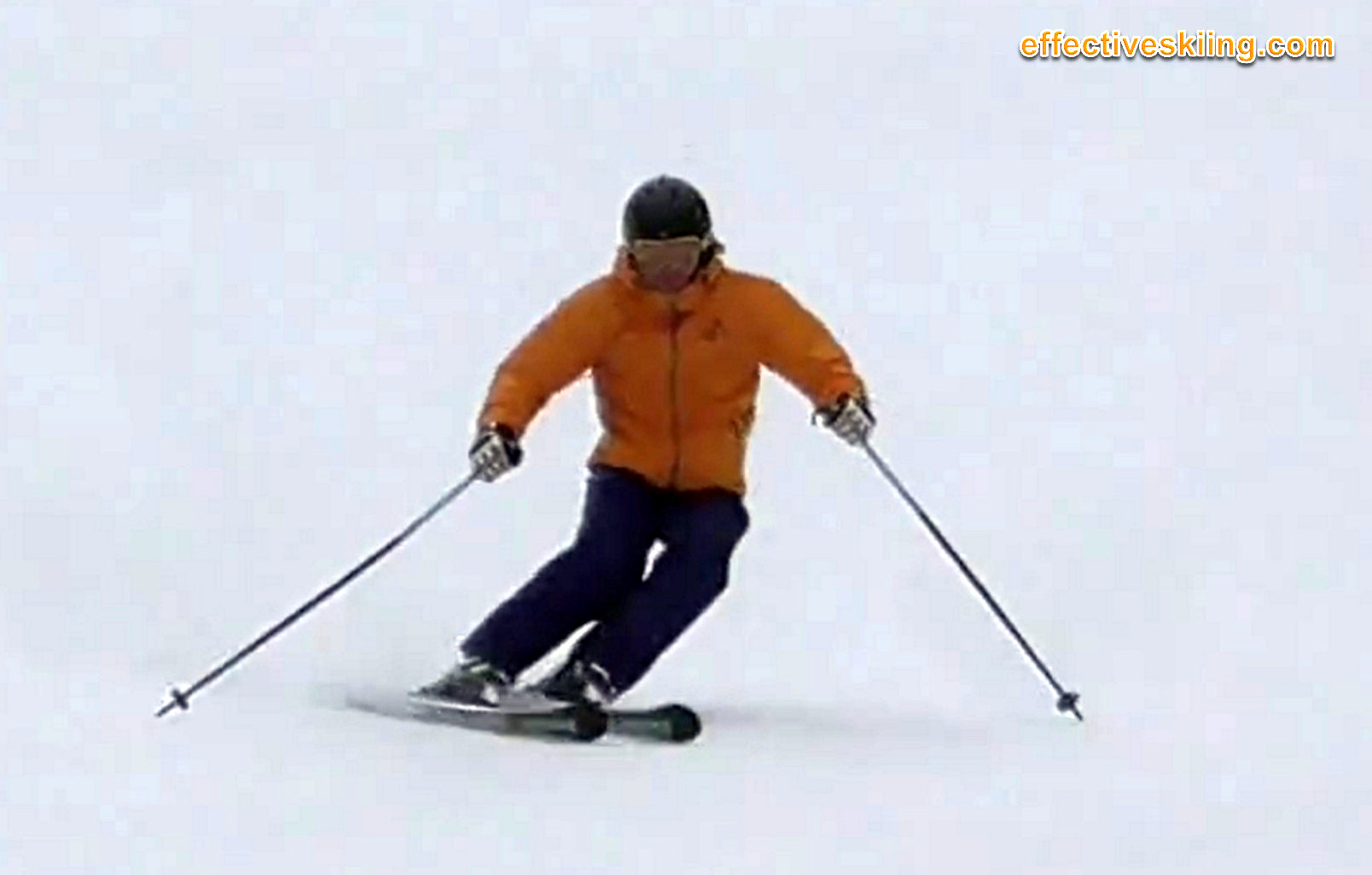
As you can see above, the amount of counteracting varies from turn to turn, depending on tactics and recovery needs (the counter in the turn above was exaggerated in order to recover from a lack of angulation earlier).
Sessions:
Related:
Drills:
→ Start improving your counteraction
References:
The wall, while a coaching tool and rule of thumb for some type of turns, is somewhat at odds with the notions of coiling and developing torque between the lower and upper body by separation. Ski racing is much more dynamic than any static guideline or position and each turn may require more or less coiling, this is why we prefer to focus on movements rather than geometric proportions or poses.