Tipping
Tipping is actively rolling the feet from one side to the other to make the skis roll on edge[^8] - the first primary movement in the Essentials framework, directing the focus in skiing from the snow up, using the feet and ankles.
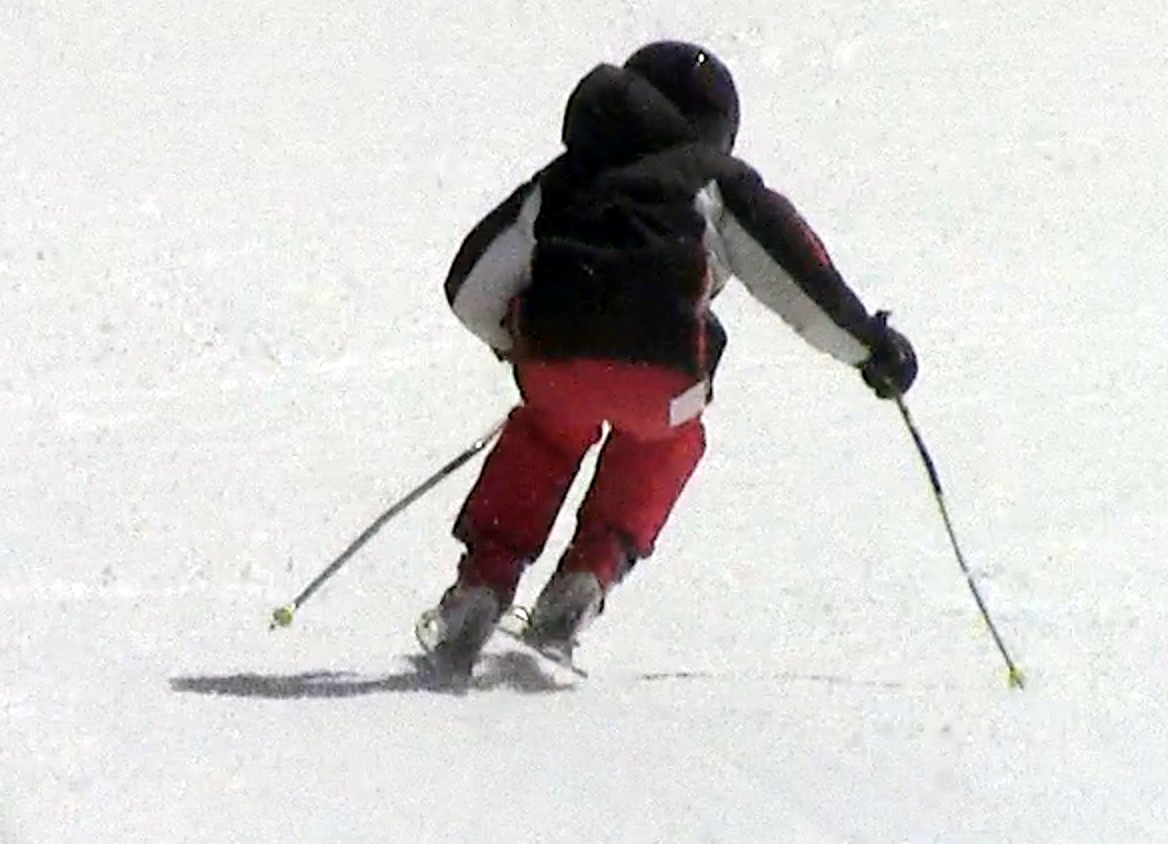
It is the most effective way to make the skis turn, because of the Sidecut and its interaction with the snow and one of the fundamental skills of an expert skier. The best description of this action or movement is to roll the ski up on edge with the feet, using the edge as a hinge.
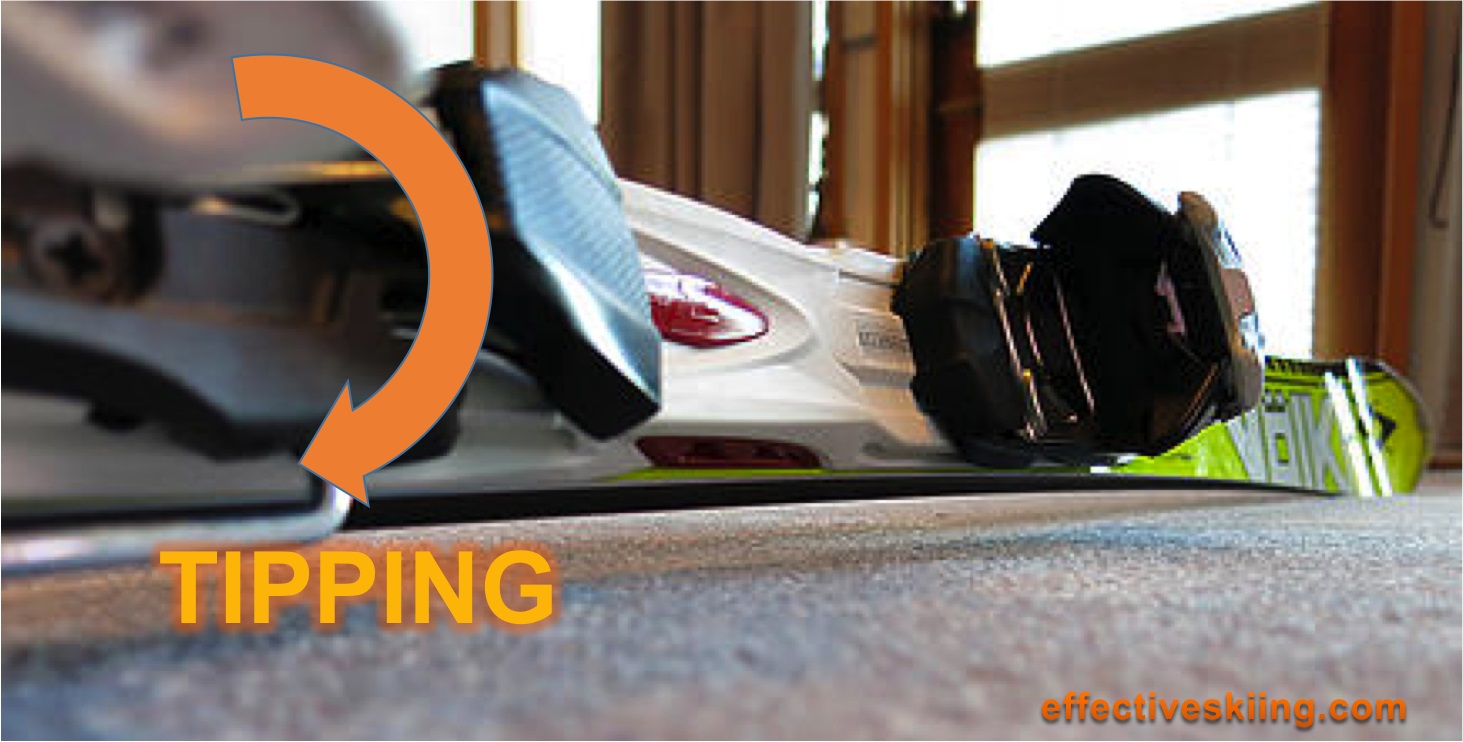
Foot tipping is a specific set of movements to put the skis on edge, which starts with the feet and ankles, via Inversion and eversion and enabled by Dorsiflexion and plantarflexion (dorsiflexion) and Flexing. This is what is usually referred to in racing circles as "rolling the ankles".
- eversion is what we do with the outside foot
- inversion is what we do with the inside foot
Be careful to not confuse tipping with some result of inclination or angulation or any other upper body effort to edge the skis! Here's an awesome video from Sean Warman on using the feet for tipping:
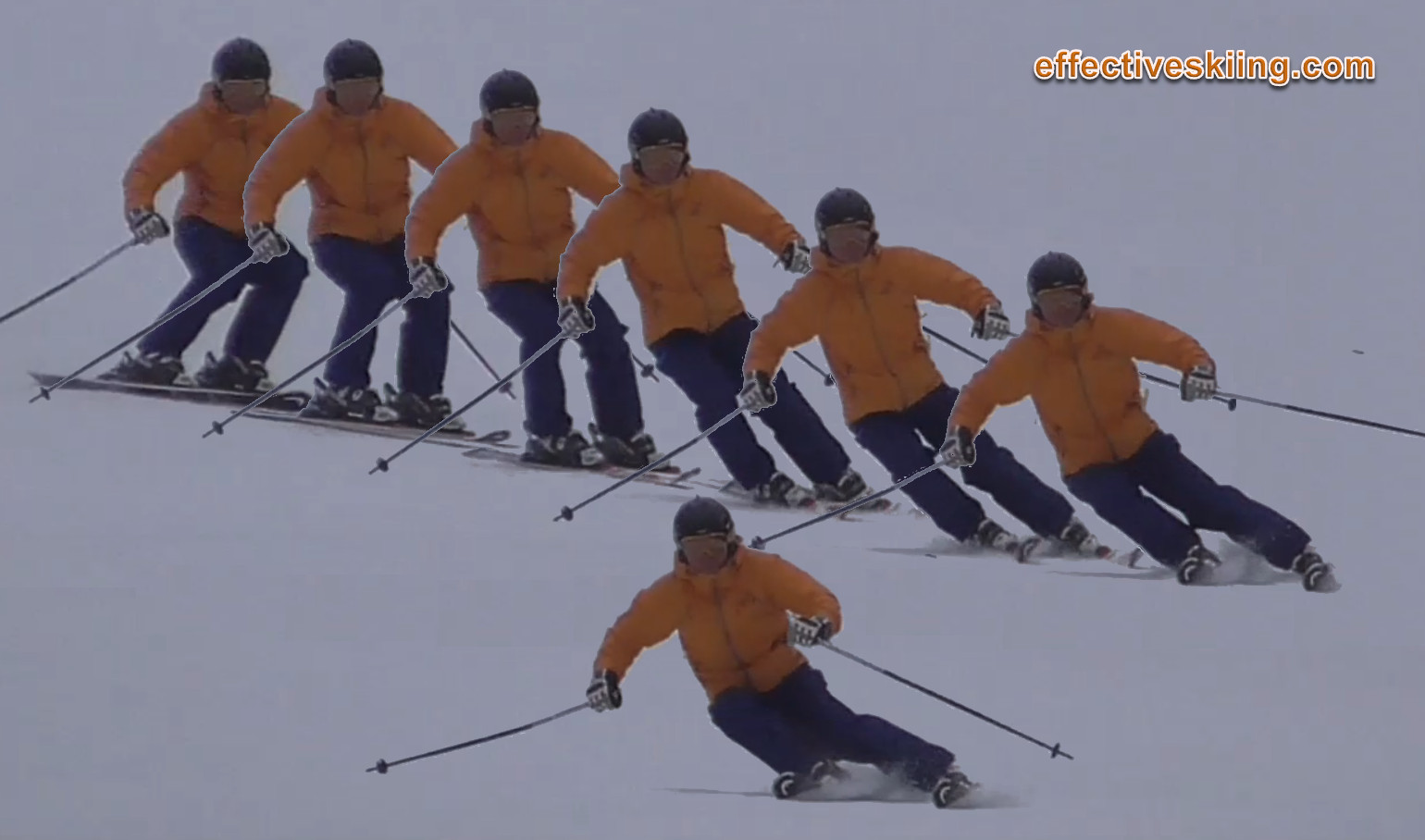
Although tipping is just the continuation of untipping from the previous turn, see the frames 3-6 in the following montage for tipping into the new turn. Notice the active inside foot in frames 3-5 and Parallel shins - for contrast, after frame 6, the skier gets lazy with tipping of the inside foot:
Upper body vs lower body
Foot tipping is a definite movement of the lower body. Sometimes edging the skis is described as a result of inclination or angulation, leaving the impression that we're dragging the skis on edge with the upper body. That is possible, but incorrect and inefficient, see Hip dump!
Inclination of COM and moving the hips inside the turn allows the skis to edge when the legs are long, but we need to focus on a clear, separate and definite rolling of the skis on edge from the feet. We always separate the upper body from lower body movements.
Note the difference in perspective between "moving the body inside the turn" and "extending the outside leg". Although often two sides of the same coin, the second seems more applicable to high performance skiing.
Use of knees
The most visible part of tipping is not the ankle and foot movements, which are more or less subtle even if vigorous and inside the boots - the most visible part of good tipping is the knees moving side to side.
Flexing of the knees allows tipping in the sense that it allows the knees to be moved side to side from the ankles, without moving the hips. They can also be moved side to side by Femur rotation and this sometimes in fact helps tipping, but that only comes in handy in high-performance skiing, at high edge angles and deep flexing - until then, a focus on strong femur rotation tends to slow learning the edging skills and impacts carving ability, as it tends to take the skis off the edge.
When flexing is not used, some refer to knee angulation when, with a long leg, the knee is pushed into the hill. This is generally a weak movement however... the knee is not really designed to flex sideways and, in general, the less stress is applied on the knees, the better.
Edging vs foot tipping
Edging appears in all ski instruction systems, in different ways, most connecting it to foot and ankle movements in the same sense as tipping here. However, while Tipping is a very specific set of movements and accompanying skills, edging is just a skill, related to putting the skis on edge.
Often, edging and inversion/eversion are considered a form of angulation, as a lateral movement[^1]. Edging is considered a result of angulation rather than its own movement and also, sometimes, edging is considered a result of inclination, in the sense that inclination into the turn (moving the COM/hips into the turn creates edging of the skis). This point of view however, tends to focus attention on big body muscles and away from fine ankle action.
In racing, edging is important and described as the movement to roll the skis on their sidewall[^6], starting from the ankles and feet and followed by inclination or angulation to increase the angles and in that sense is similar to our use of tipping here. It is so important for expert skiing and racing that one of the turn phases is sometimes named edging[^6].
Edging is considered the essential skill for Carving, but we see the action of rolling the skis on edge to be the essential skill for skiing, not just when carving, but all the time. And we will focus on the most effective ways to do that: regardless of whatever else we do on skis, we should tip them on edge first and then add pressure, angles, counterbalance, steering or whatever else is needed for this or that turn.
The truth is that we can easily tip the skis on edge while standing still, without any focus on either inclination or angulation, which you can easily see by just doing. The angulation or inclination is a result not of tipping but of actions of the rest of the body to maintain balance (just follow the legs and incline into the turn against the turn forces or resist that, angulate and "appear still"). It is thus more beneficial to see tipping as a standalone and primary movement[^2] and focus on it. Its relationship to Counterbalancing, angulation and inclination (as in lack of counterbalancing) must be explored independently.
Tipping the inside ski
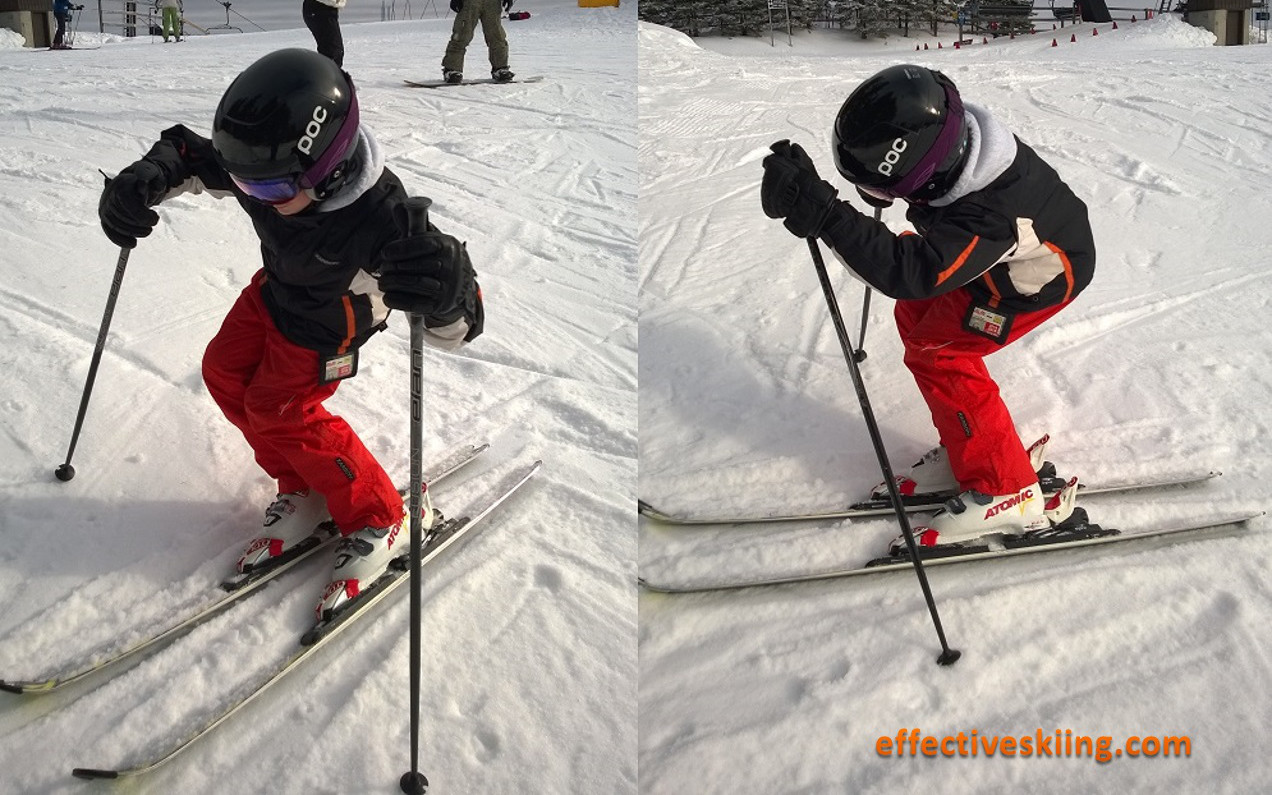
Most skiers are "outside foot dominant", meaning they focus more on tipping the outside foot (eversion), while some are "inside foot dominant", meaning there is a stronger action of and more focus on tipping the inside foot (inversion).
The big toe edge is the Edge of Security; the little toe edge is the Edge of ChampionsJ. Clendenin
Tipping the inside foot is more important[^2], to maintain parallel shins, have the skis at the same angle and, executed properly, it will also drag the outside ski on edge as well (the phantom move), at lower speeds.
At higher speeds, un-tipping of the old outside foot morphs into tipping the new outside foot and it is an important element of great skiing, see Tipping and flexing!
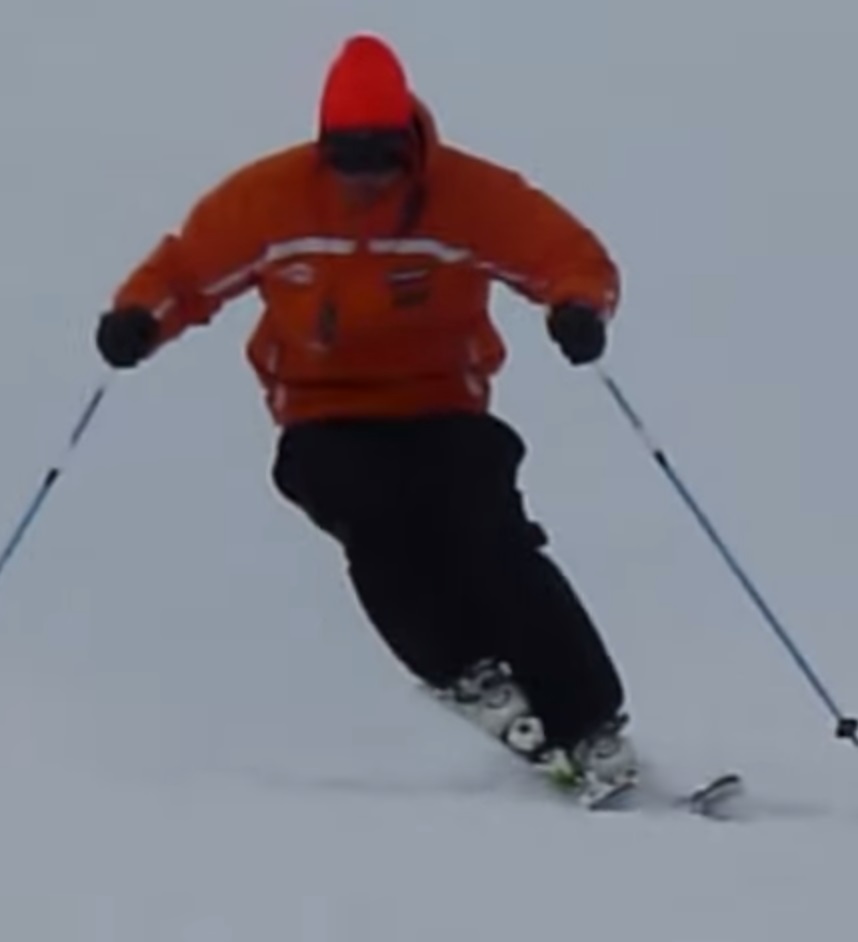
Many racers and high performance skiers have a keen focus on the inside foot - which is often lifted and tipped strongly into turns and this focus on the inside foot is now more and more a part of performance skiing, especially carving, at the higher levels.
The outside ski is the rider and the inside ski is the decider. J.F. Beaulieu
Biomechanics of tipping the inside foot
Get expert to see this · $60/yr
Relationships
Enablers:
- flexing enables tipping since the knees have to be flexed to allow the boots to tip without disturbing the upper body. See flexing and tipping
- unweighting the feet enables tipping, as an unweighted ankle (in open chain mode) has a larger range of motion and requires much less effort
- boots properly fitted will enable sufficient ankle movement, see Ski Boot Fitting
- pulling the inside ski back, Dorsiflexion
- Counterbalancing allows bigger range of tipping and edging
Inhibitors:
- pushing into the skis tends to flatten them and stop the tipping movements, see Tipping and extending
- extension,
- if not passive creates pushing and flattens the skis
- long legs (in transition) mean the tipping cannot happen because the hips need to come down first
- boots
- if too tight will not allow sufficient movement of the ankles to make inversion/dorsiflexion effective
- if too large will not allow the foot/ankle movements to affect the skis, resulting in Hip dump
- shuffling the inside leg forward (too early) will not allow the ankle to work and the knee to move in
- alignment - if the boots are not aligned and canted properly, tipping will be really hard to achieve and it will be hard to balance on the edge.
Analyzing the biomechanics
Get expert to see this · $60/yr
Learn more
- Start tipping
- Tipping not hipping
- Tipping and keeping the feet underneath
- About ankle eversion and inversion
- We ski with the feet and ankles
Drills:
Articles:
→ Start improving your tipping
References:
- NZSIA Manual, Skiing - a sport of movement [^1]
- Essentials of Skiing, p29 [^2]
- How The Racers Ski [^4]
- USSA Technique and Tactics [^5]
- CSCF Canadian approach to Ski Racing [^6]
- PMTS Instructor Manual, Harald Harb [^7]
More reading:
_-----------
Tipping the inside foot
Most skiers are "outside foot dominant", meaning they focus more on tipping the outside foot (eversion), while a few are "inside foot dominant", meaning there is a stronger action of and more focus on tipping the inside foot (inversion).
Tipping the inside foot is more important[^2], to activate the kinetic chain from the bottom up, maintain parallel shins, have the skis at the same angle and, more importantly, through the The Phantom effect, it will also cause the outside ski to go on edge as well, especially at low speeds.
Many racers and high performance skiers have a keen focus on the inside foot - which is often lifted and tipped strongly into turns and this focus on the inside foot is now more and more a part of performance skiing, especially carving, at the higher levels.
Issues with inside foot tipping
In the first frame in the following montage, you can see the skier is late to tip the old outside foot (or rather untip it), for various reasons. In the frames 3-6, we can see the tipping into the new turn. Notice the active inside foot in frames 3-5 and Parallel shins - for contrast, from frame 6, the skier gets lazy with tipping instead of tipping continuously throughout the turn:
Biomechanics of tipping the inside foot
Get expert to see this · $60/yr
Movements | discussion
See Skiing - a philosophy of movement for a detailed comparison of the different movement frameworks.
Learn more
The focus on the inside foot and specifically tipping, was introduced to me by way of the Essentials of Skiing book (which is still the best way to spend 25$ on skiing).
- Start tipping
- Tipping not hipping
- Tipping and keeping the feet underneath
- About ankle eversion and inversion
- We ski with the feet and ankles
Drills:
Articles:
→ Start improving your tipping
References:
- Essentials of Skiing, p29 [^2]
- PMTS Instructor Manual, Harald Harb [^7]
- blog [^8]