Sidecut
On-piste skis have an hourglass shape, the sidecut: wider tips and tails and narrower in the middle, underfoot.

The reason is so that when we put them on edge to make a turn, the ski will bend and turn by itself - here is a ski on edge, with and without pressure on it:
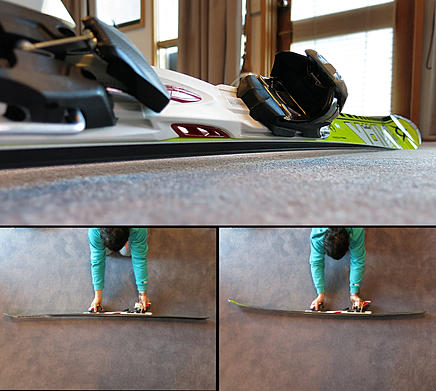
This is what makes Tipping the skis on edge the best technique for turning, on piste.
Sidecut turns
The sidecut has a radius - this is the "nominal" arc the ski will make when you put the ski on edge at a "nominal" angle, with a "nominal" pressure. This number, the radius, should be marked on the ski, in meters, and here are some categories that you'll find:
- 10-13m - slalom ski, small turns on piste
- 14-22m - all mountain skis, powder skis - can take on a little bit more speed and are likely fatter
- 18-35m - GS skis, from low radius master's and Junior skis to World Cup
- 40m and above: speed skis (SuperG, Downhill)
Bending the skis
This printed radius of the sidecut is more of an FYI, relaying some basic information about the ski's intended purpose and how the ski will behave. The reality is that you'll rarely get the same radius turn.
If you put the ski on edge more, at bigger angles than the nominal angle for the "printed radius", with usually higher speed, it will bend more as a result and it will make a tighter turn. The name of the game in performance skiing is bending the skis more.
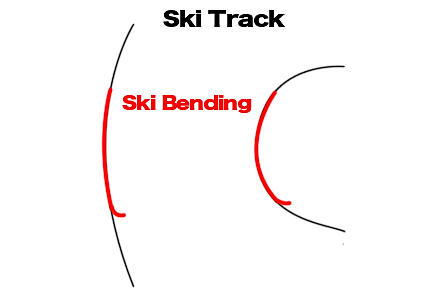
One estimate is that the ski will turn at 70% of the sidecut radius when carved at 45 degrees to the snow and 50% of the sidecut radius when carved at 60 degrees[^1].
Carving and riding sidecut
Note that most skiers have little control when carving - we're going to call that railing or carving the ski at or more than the sidecut radius. When you see a skier on Slalom skis, with radius 10-13m, make large arcs without the ability to tighten the radius, that is railing, or carving with little control.
The aim of the skiers should be to be able to control the radius of the turns they make and be able to make at least sidecut turns, i.e. make the ski bend at least with the sidecut radius.
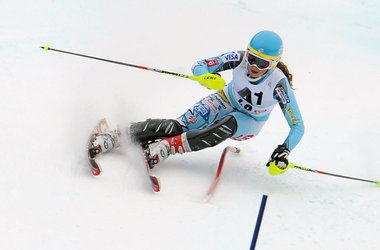
That is achieved by tipping the skis at the appropriate (bigger) angle and balancing on it, to get it to bend sufficiently to make the shorter radius turn. This requires better Tipping and Counterbalancing as well as Counteraction.
Read more
Talks and sessions:
- Some physics - how the skis work
- Bending the skis
- Start tipping
- Factors that determine the ski behaviour
References and more reading:
- Ultimate Skiing, p32 [^1]
- Ski Bending
- Ski geometry#Sidecut