Sitting on a toilet
What does sitting on a toilet have to do with skiing, you may obviously wonder - unless this is a life skills blog...?
Part of my Using Vivid Images strategy, this is yet another one of the very, I think striking images of Flexed release and flexing in the transition or down-unweighting or cross-under, as you may hear it called sometimes.
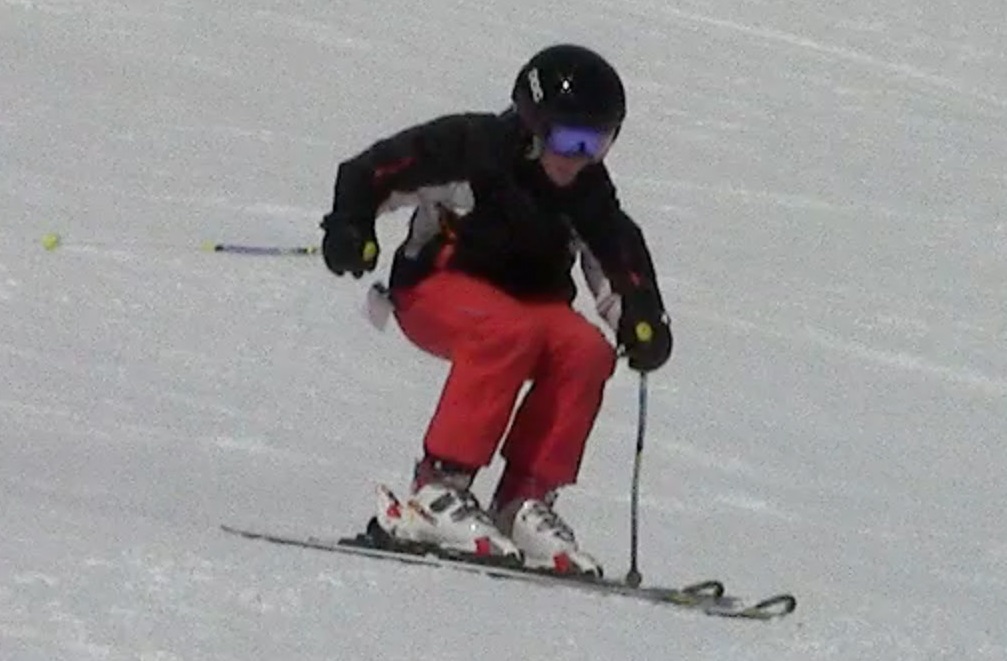
The basic idea is that we want the upper body to be low in the transition, to avoid pushing off or extending and possibly loosing contact with the snow or getting pushed out of balance.
So, in the transition, you are sitting on a toilet, flexing the old outside leg and pulling the knees to your chest.
The dreaded back seat
One general side-effect of flexing a lot in the transition is getting the upper body behind the boots - this needs to be corrected: establishing pressure on the tips of the skis early in the new turn is paramount.
The correction is either via Recentering and a forward pole plant or pulling the skis back. Experts usually focus on pulling the skis back, but many choose to focus on moving the body forward.
Care must be taken when "sitting" lower, that the skier doesn't loose the fore/aft effort. At the same time, the boots must be pulled back and kept back - see Keep your feet underneath you. As a progression, first focus on flexing lower when releasing and then, when you start to own the flexing, shift focus on keeping the boots back as well.
Counter
Try this: sit on a toilet and bend forward at the waist. In stiff ski boots. Meh! Now counter a bit and try that again... by counter I mean rotate the upper body a little on one side. Easy, no?
Countering and keeping the hips open in the transition is a very important enabler. Not only will you avoid getting in the back seat, but you will also find it much easier to balance on the skis.
Why ?
Why on earth should anyone complicate a transition like so?
In high energy turns, if you do not absorb the energy at the right time, you will be pushed out of balance.
It is a lot easier to tip the skis into the new turn if the knees have mobility, meaning they are flexed in the transition.
Avoiding large up and down unnecessary movements of the large massive upper body is a good thing, especially in racing.
Maintaining contact with the snow is extremely important in say icy conditions and up and down movements not only may throw you out of balance or cause to loose contact with the snow.
etc...
Drills
The classic drill for this is dragging your poles: grab your poles from under their grips and drag their tips in the snow for an entire run - this will force not only your shoulders to stay level, but also your body to stay low.
An extreme is to grab the poles from even lower, say half way down.
Another drill is touching the boots in the transition, with a progression to Outside boot touch with a twist.
Yet other drills coaches like is skiing in a tunnel: imagine skiing in a low tunnel where you have to keep low in the transition to not bang your head into the ceiling - that's another vivid image, but I do prefer sitting as it really drives home the point about relaxing the leg muscles to lower the butt - I mean that's what it is about, right? The toilet is there just for effect...
See these tech talks:
Drills to refine this:
More to read:
→ Start improving your release