What is the effective technique
Here are some of the basic principles of effective skiing:
- skiing from the snow up, starting with the feet
- separating the lower body from the upper body, for balance - and in general, separating the movements of different body parts
- seeking the movements that create balance
- entice the skis into turning and use the ski design, don't muscle them around
Just like steering a bicycle from the handlebars, we will steer our skis by tipping the skis on edge while balancing on them to manage pressure and angles. We will not attempt to dominate the skis via gross body efforts to push them or drag them around, but rather direct them and work with them.
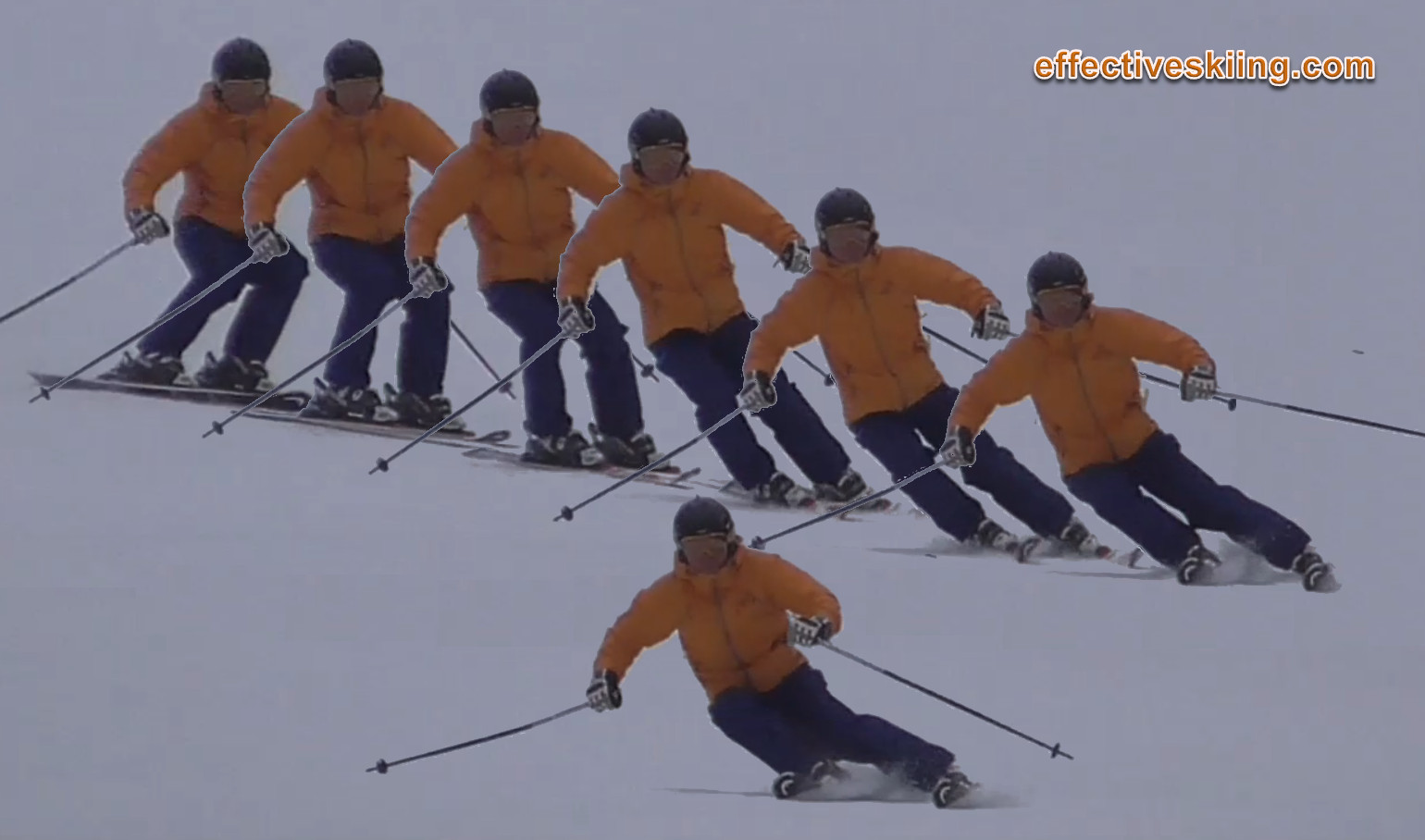
We flex and unweight the legs to allow us to tip the skis on edge from the feet and ankles, as opposed to muscling them around from anywhere between the knees and the shoulders. We ski from the feet up and we balance on the skis tipped on edge and use different movements to make them perform.
We use the upper body to balance and stack on the skis rather than using the upper body to turn the skis or ignoring it altogether.
We need to achieve bigger angles, not because they look cool, but because they allow a more effective speed and turn shape control. But we'll also look cool too :)
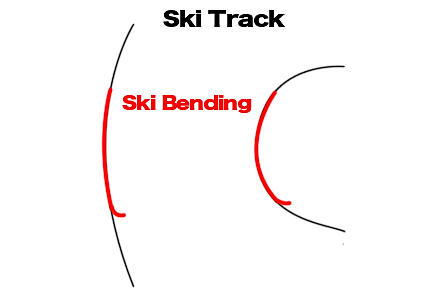
Many skiers separate their skiing in two kinds of turns: pivoted turns where they quickly and forcefully twist the skis versus edge locked carved turns, where they ride the skis and use the ski design to create the turn, with little steering or separation.
We will always choose to use the ski design and minimize forceful movements, however, separation is a fundamental skill. The skis do not have to carve an edge locked arc for the ski shape to work and create a turn. The skis will turn more or less depending on how much they are tipped on edge and how pressure is managed. Steering and separation however, often two sides of the same coin, create the balance and alignment needed to conquer the mountain.
We will master the short turn, the carved turn and other turns. Carving the skis on any conditions is the goal, but certainly not the only way: skidding the skis is just fine and quite useful, when not affecting balance.
Note that some ski designs, like fat rockered powder boards use different mechanics, but the idea is the same, on the terrain they were designed for: put them on edge and they'll create a turn!Three words
I thought it unlikely that a choice of 3 words can summarize an entire approach to high level skiing, but the phases of the turn I found defined in an older CSCF manual do just that:
unloading, edging, loading
If you are to want to summarize effective skiing in 3 words, those could be it: unload the skis to end the previous turn, put them on edge to prepare the next turn and then load them to make the turn.
Bio-mechanics
We will have a focus on biomechanics. There are only so many ways we can usefully contort our bodies and use the equipment and we'll go through them all, see what works and what doesn't.
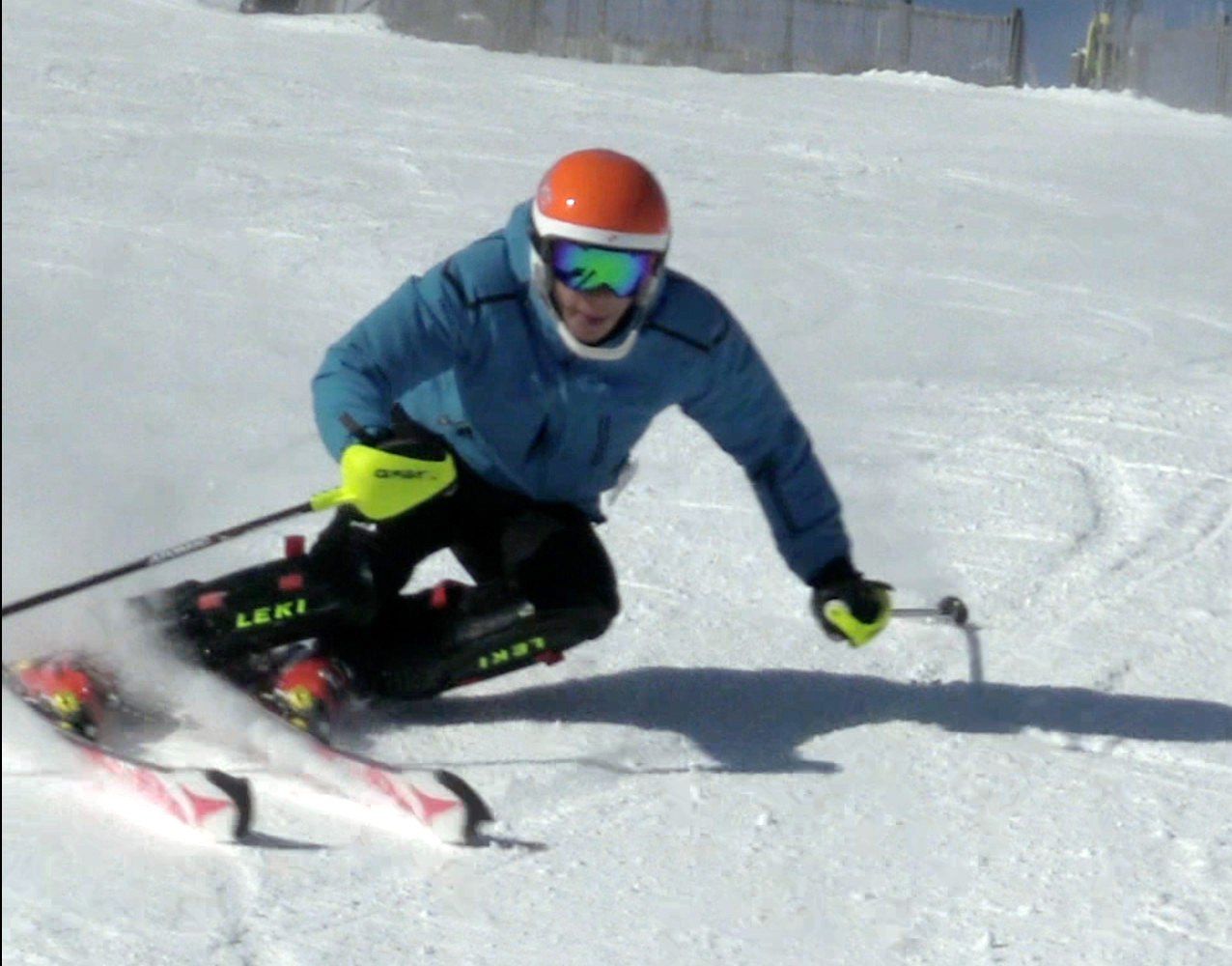
Using the skeleton, for instance, to support weight is more efficient than using the muscles. Stacking is important, to enable that and we achieve that via Separation and angulation or Counteraction and Counterbalancing.
However, we will not exaggerate and will not break movements or groups of movements down to individual joints and muscles, except on occasion. We will let the brain figure out the many details of our effective movements.
High performance skiing, slowly
Slowing down practice is a very important component of learning. We will slow down practice in two ways: using slow speeds on gentle slopes and drills that pick one movement and allow you to slow it down and refine it.
On the other hand, our progressions guide you towards high performance skiing, with a focus on on-piste skiing and we will rather keep you on gentle slopes than introduce movements that disrupt the ski engagement.
No shortcuts to performance
Some are looking for a feeling of high performance skiing quickly, so they resort to shortcuts. For instance, they may learn the snowplow to control speed and then throw themselves on steep runs (blues or even blacks). Some insist on forceful twisting of the body or the skis to start the turns rather than learn how to use the skis properly, which takes more time…
Because the ACL is connected diagonally across the knee joint, [...] it is subject to stretching when the ski and the lower leg twists to point inward.The Physics of Skiing - Skiing at the Triple Point, David Lind & Scott Sanders, 2004"
Balance skills: minimal. Injury potential: maximum. These are not only potentially dangerous at speed, but the more time you spend doing something poorly, the better you get at doing it poorly!
Practice does not make perfect. Only perfect practice makes perfect.Vince Lombardi, coach"
The main progression here will refine your skiing, one step at a time and we will insist on the most effective movements to control the skis, all the way from beginner to expert skier, and ask you to accept the fact that you have no business being on the steepest of slopes or the rockiest of mountains or the deepest of powders before having the skills to ski effectively.
As a beginner, you belong on the easiest of runs: the greens, and you'll have to work your way through learning the effective movements, technique and skills and improving your balance and control, and thus earn moving off to the higher levels. Our undertaking is to help you do that fast and effectively.
It is important that we each know and recognize the terrain suitable to our current abilities and of course, not only ski within our limits, but go to even easier terrain to learn new techniques or movements or work on refining them.
We're following a Spiral Learning approach and will start slowly, remove unwanted elements and accelerate learning as we add more and more elements and details and increased range of motion to the fundamental movements of great skiing.
Terminology
There are many schools of thought and some use different vocabularies. We'll try to reconcile them, but you will see different terminology here and there. Such is life - the wiki explains every important technical term we use and what it means, in detail.
Overall, the terminology defined in the book Essentials of Skiing makes the most sense to us, being very specific and well defined and we'll try to use that as much as possible.