The Gretzky principle
If the stock market is at an all time high, after a long and rapid growth in valuations, what do sensible investors do? Buy more expensive stocks or sell at a gain? What would you do: wait for the market to eventually decline significantly or will you have the confidence to sell before that happens? How the heck is that related to ski racing technique?
.todo photo with ski racing stock market graphs? or Gretzky shooting . puck
I heard this quoted at some point, passed down from his dad by the great Canadian Hockey player, Wayne Gretzky:
Skate to where the puck is going, not where it has been.
We know that the skis will come around and, as they come across the direction of travel, do we wait until pressure grows, to react and start Flexing and Release, or do we pre-empt that and start releasing earlier, so when the skis are across, we have released already?
We know that, after the switch, the skis will travel on a circular path (because we did everything else right, put them on edge etc and they will come around and catch up with the hips… so do we make the hips follow the skis around the bigger trajectory or do we send the hips down the hill, where the skis will meet up with?
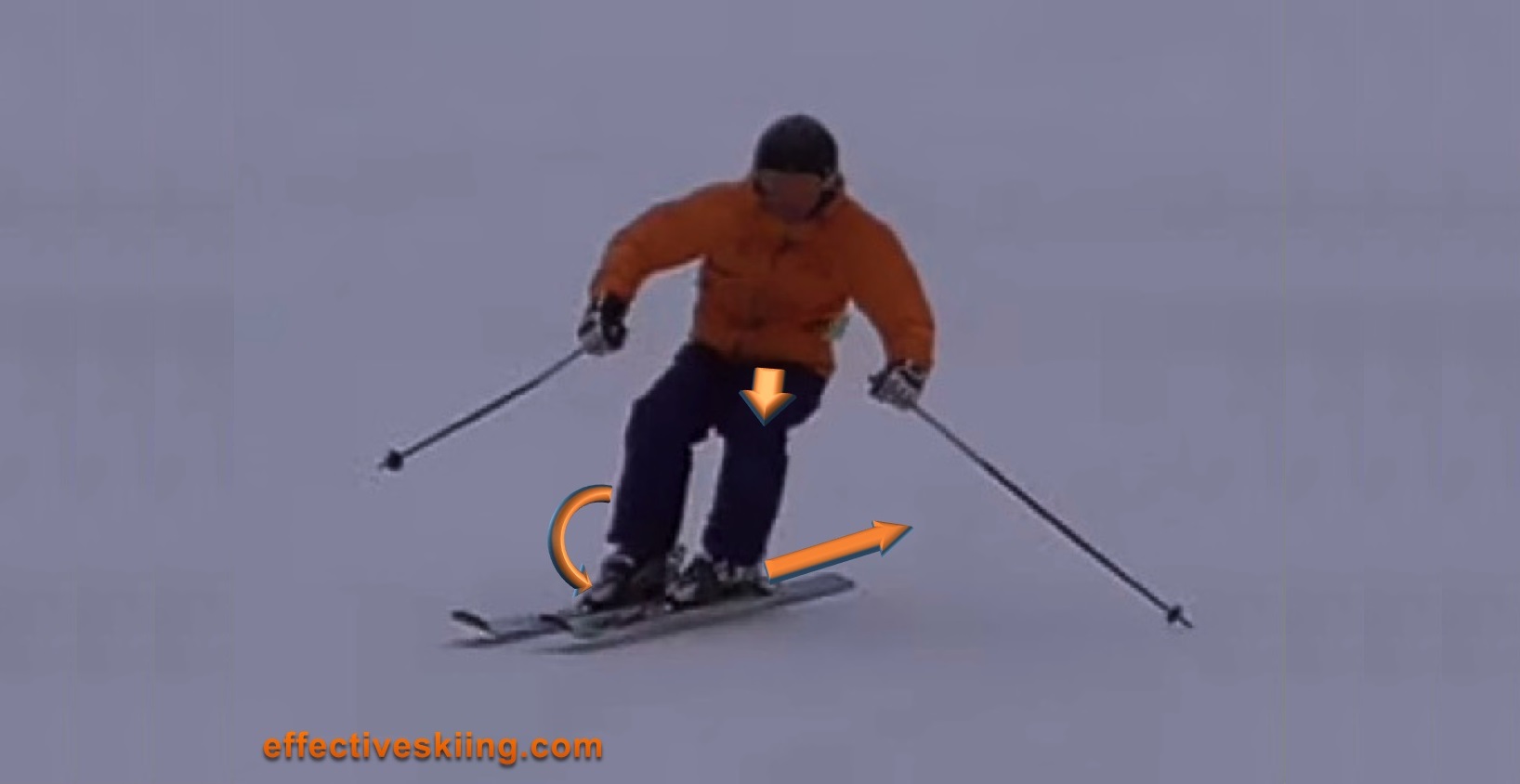
Don't aim where the puck is, aim where the puck will be.
We need to knowledge of how the puck is moving and the confidence that it will go this way or that way. We need the knowledge and the confidence to send the hips ahead of the skis or not.
Where is forward
Skiing is as dynamic a sport as it gets and perhaps the best application of this principle is in skiing correctly: focus on edging properly and have the confidence that the skis WILL engage, carve and come around.
Big joints, little joints
Big joints and big muscles take more time to get activated. Big body parts (like the torso) take more time to start moving than lower body parts.
This results in a general need to start activating big muscles and get big body parts engaged earlier, so they will be "in the right place, at the right time".
The small muscles and small body parts like the ankles and feet can react quickly, which is why we use them for fine adjustments and have more leeway in their timing.
Early counterbalancing
Start counterbalancing as soon as the switch of the edges. The torso must not be allowed to start inclining, as much as it is practical... as if it does, then that tendency must be corrected later in the same turn and that will impact the quality of the turn.
Early counter
Start counter as early as possible. For the same reason, the upper body rotating is something that will have to be stopped and even reversed later, so, especially in shorter duration turns, the counteracting movements need to start early in the turn.
Can you find more examples of applying this principle in alpine skiing? What about other sports or other domains of life?
Read more:
I hope this short article gave you some ideas, a new perspective on sking and perhaps an "a-ha" moment.