The Extended Transition
The "up-unweighting" transition, where the outside leg stays the same length as it was at the apex and the inside leg extends to match it - we call this the extended transition.
While we jokingly call this The meerkat move and typically discourage it, it is a way to transition from one turn to the next, that many find familiar (walking, running involve the same movement patterns).
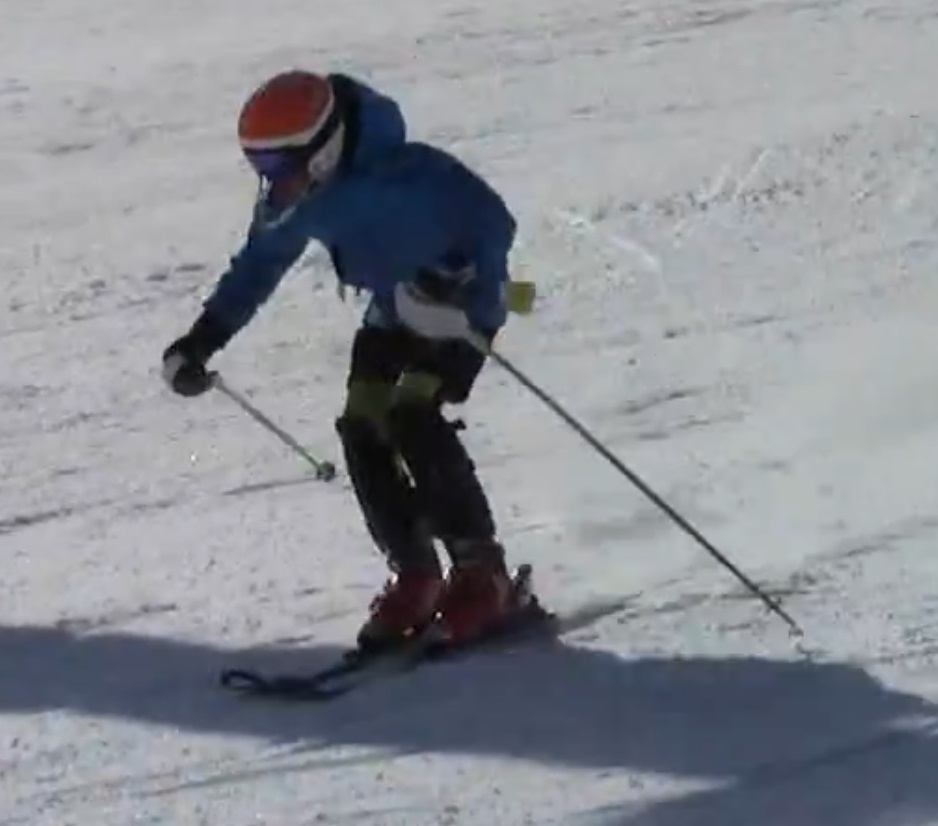
While there are many possible variations, the main movement pattern in this type of transition is one where the outside leg either stays the same length or extends. As the skis turn across the direction of travel, the body will be impulsed "up" and sort of hop over the long legs, to be able to cross over the skis and into the new turn.
Tech talk
See The meerkat move for more details on this type of transition.
We generally discourage it because it has many drawbacks, including:
- not allowing the feet to work
- disconnecting the hips and boots from the snow
- slowing down the engagement
- loss of control (you must wait for the body to drop back down again)
- etc
Instead we much favor a release type of transition (or flexed transition), see more at Release.